
Description
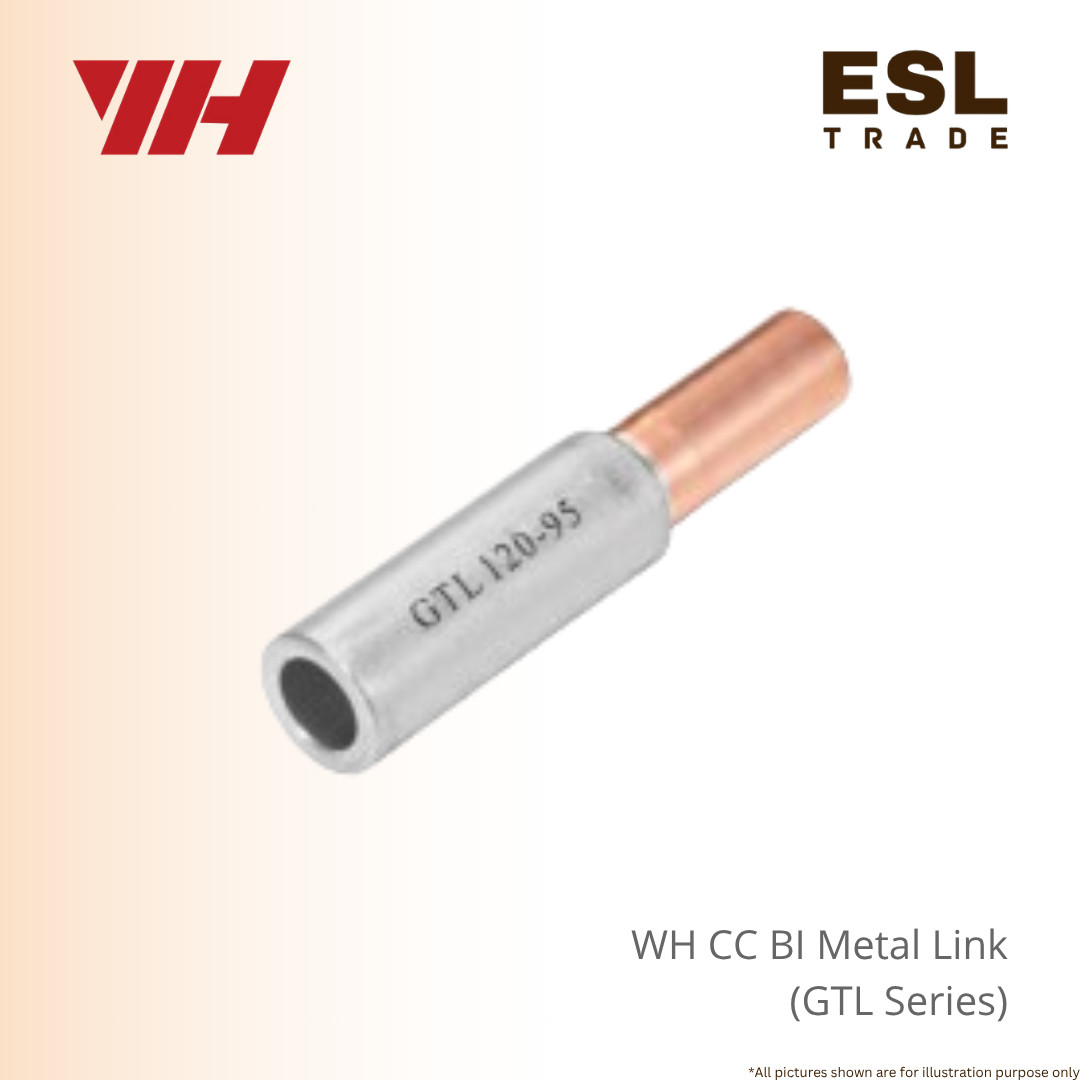
WIN CC Bi-Metal Link GTL Series (16mm² to 400mm²) Friction Welded Copper-Aluminum Through Joint Connector High Performance Transition
The CC Bi-Metal Link GTL Series provides a robust, seamless inline connection for joining aluminum cables directly to copper cables in overhead power lines, underground distribution systems, and switchgear panels.
Connecting aluminum and copper directly in power transmission lines often leads to galvanic corrosion and thermal oxidation due to dissimilar metal properties.
The GTL series eliminates these failure risks by joining high-purity electrical aluminum and copper halves using advanced friction-welding technology.
Designed as an inline barrel sleeve joint, each GTL link allows crimping of an aluminum conductor into its aluminum end and a copper conductor into its copper end.
The friction-welded solid interface blocks moisture and air, maintaining high electrical conductivity and structural strength across temperature fluctuations.
The CC Bi-Metal Link GTL series accommodates cable sizes from 16mm² up to 400mm²:
-
Light to Medium Cross-Sections (GTL-16 to GTL-50): Suitable for sub-main power connections and commercial distribution lines, featuring overall lengths from 70mm to 89.5mm.
-
Intermediate Cross-Sections (GTL-70 to GTL-150): Built for sub-station feeds and heavy industrial wiring, ranging in length from 98.5mm to 116mm.
-
Heavy-Duty Power Lines (GTL-185 to GTL-400): Designed for high-capacity feeder cables and utility transmission grids, offering total sleeve lengths from 125mm to 155mm with outer aluminum diameters up to 38mm.
By preventing bimetallic contact breakdown and maintaining consistent current flow, the GTL series provides a long-lasting inline joint solution for power utility systems.
Product Details :
| Type | Length | A CU/Out Diameter | B AL/Out Diameter | d CU Diameter | D AL Diameter |
| GTL-16 | 70 | 9 | 10 | 5.7 | 6.5 |
| GTL-25 | 75 | 10 | 12 | 6.5 | 7.5 |
| GTL-35 | 84 | 11 | 14 | 7.5 | 8.5 |
| GTL-50 | 89.5 | 12 | 16 | 8.5 | 10.2 |
| GTL-70 | 98.5 | 14 | 18 | 10 | 11.5 |
| GTL-95 | 106 | 16 | 21 | 11.5 | 13.5 |
| GTL-120 | 109 | 18 | 23 | 13.5 | 15 |
| GTL-150 | 116 | 20 | 25 | 15 | 16.5 |
| GTL-185 | 125 | 22 | 27 | 16.5 | 18.5 |
| GTL-240 | 130 | 24 | 30 | 18.5 | 21 |
| GTL-300 | 144 | 27 | 34 | 21 | 23.5 |
| GTL-400 | 155 | 30 | 38 | 23.5 | 26.5 |
Frequently Asked Questions (FAQ)
Q1: What is the primary difference between a bi-metal lug (DTL) and a bi-metal link (GTL)?
A : A bi-metal lug (DTL type) is used to terminate an aluminum cable onto a flat copper busbar or equipment terminal bolt. A bi-metal link (GTL type) is an inline connecting sleeve used to splice an aluminum conductor directly to a copper conductor along a cable run.
Q2: Why is friction welding necessary for GTL bimetal links?
A : Friction welding creates a solid-state molecular bond between the copper and aluminum sections without melting. This process prevents void formation, reduces contact resistance, and prevents galvanic corrosion between the two dissimilar metals.
Q3: How do I match the right cable size to a GTL model?
A : Each model’s copper side inner diameter (d) and aluminum side inner diameter (D) correspond to standard conductor gauge sizes. For example, GTL-70 features a 10 mm copper inner diameter and an 11.5 mm aluminum inner diameter to accept stranded copper and aluminum cables.
Q4: Do I need separate crimping die sets for the copper and aluminum ends?
A : Yes. Because the aluminum side has a larger outer diameter (B) than the copper side, you should use the appropriately sized crimping die for each metal end according to its respective outer diameter.
Q5: Should I use conductive compound inside the aluminum barrel before crimping?
A : Yes, applying an anti-oxidation contact compound inside the aluminum barrel removes the aluminum oxide layer and protects the joint against moisture and air ingress, ensuring long-term conductivity.
Reviews
There are no reviews yet.