Lighting the Way: A Beginner’s Guide to Lux Reports
Have you ever walked into an office that felt too dim to work in, or a parking lot that felt unsafe because of dark patches between the lights? Professional lighting design is the science of preventing these issues, and the Lux Report is the most critical tool in that process.
Whether you are a building owner, an architect, or a contractor, understanding the basics of a lux report ensures your space is safe, compliant, and comfortable.
What is a Lux Report?
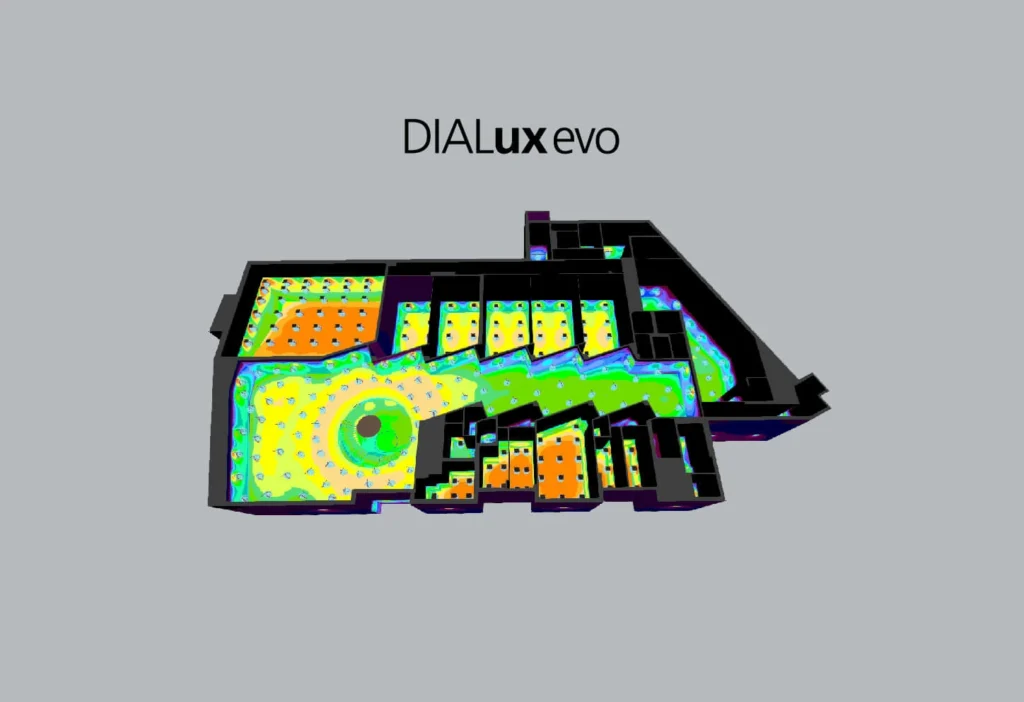
A lux report is a technical document that simulates how light will behave in a specific space. It is typically generated using industry-standard software called DIALux evo.
Think of DIALux as a “digital twin” of your building. It takes the guesswork out of lighting by providing a 3D visualization and mathematical proof that your chosen light fixtures will meet the actual needs of the area before you even buy a single bulb.
Key Elements of a Good Lux Report
When you review a report, you don’t need to be an engineer. Just focus on these three core metrics:
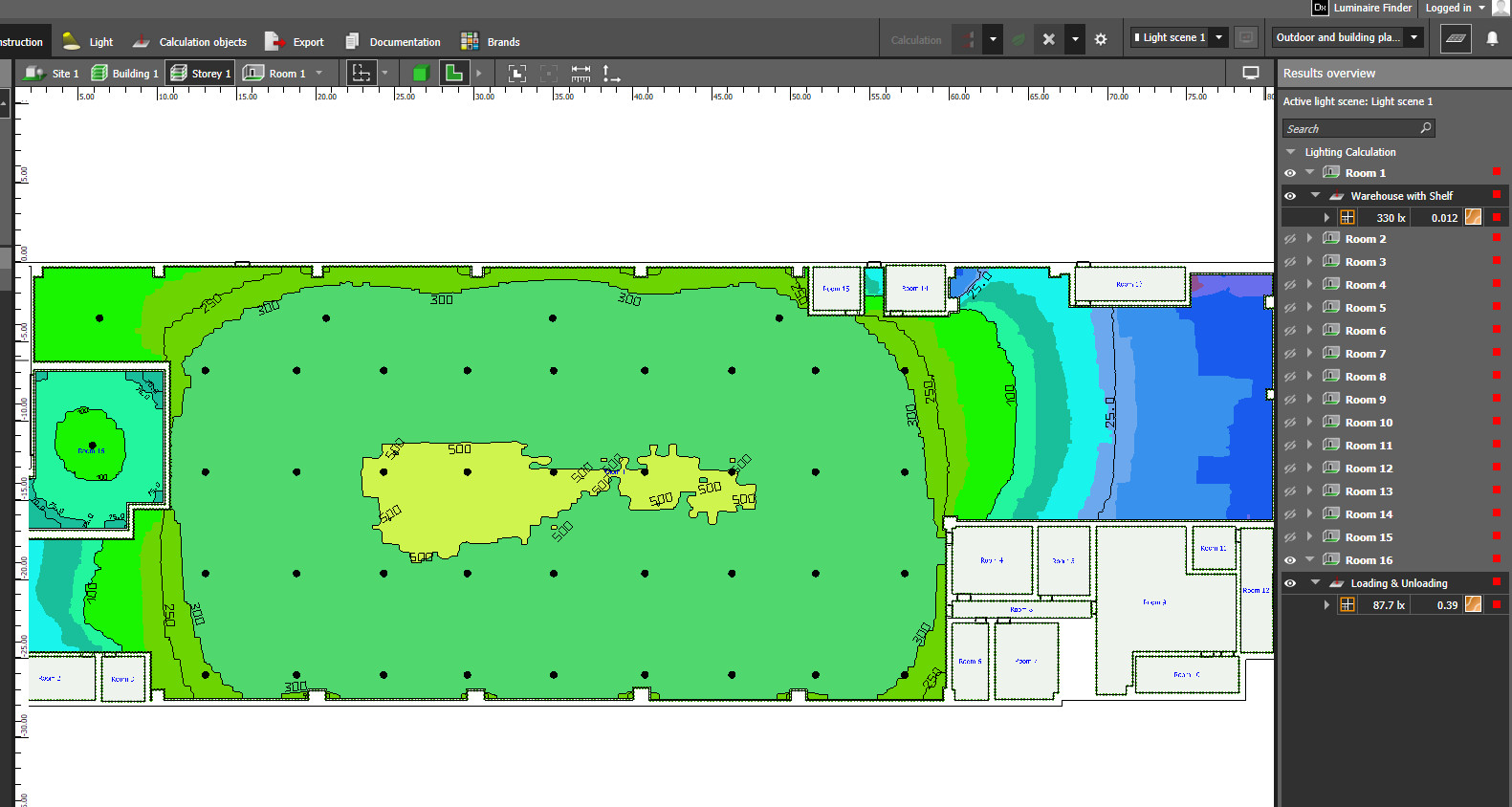
- Average Brightness (Eav)
Measured in “lux,” this is the average amount of light falling on a surface. Different spaces have different needs:
- Offices:Generally need around 500 lx for comfortable typing and reading.
- Storage Areas:Often require much lower levels, around 20 lx.
- Walkways:Usually target 5 lx to 15 lx to keep people safe.
- Evenness or “Uniformity” (Uo)
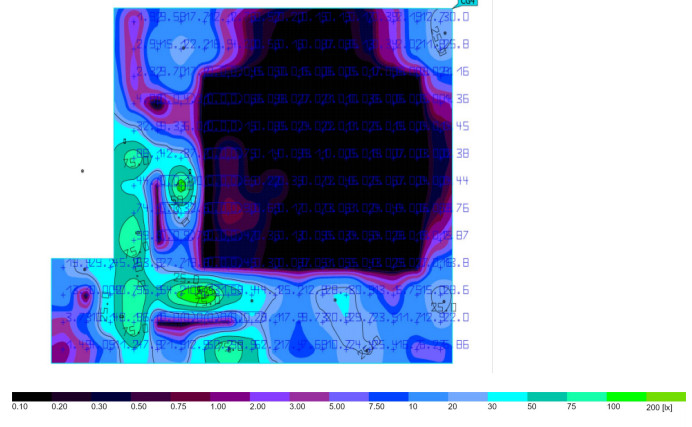
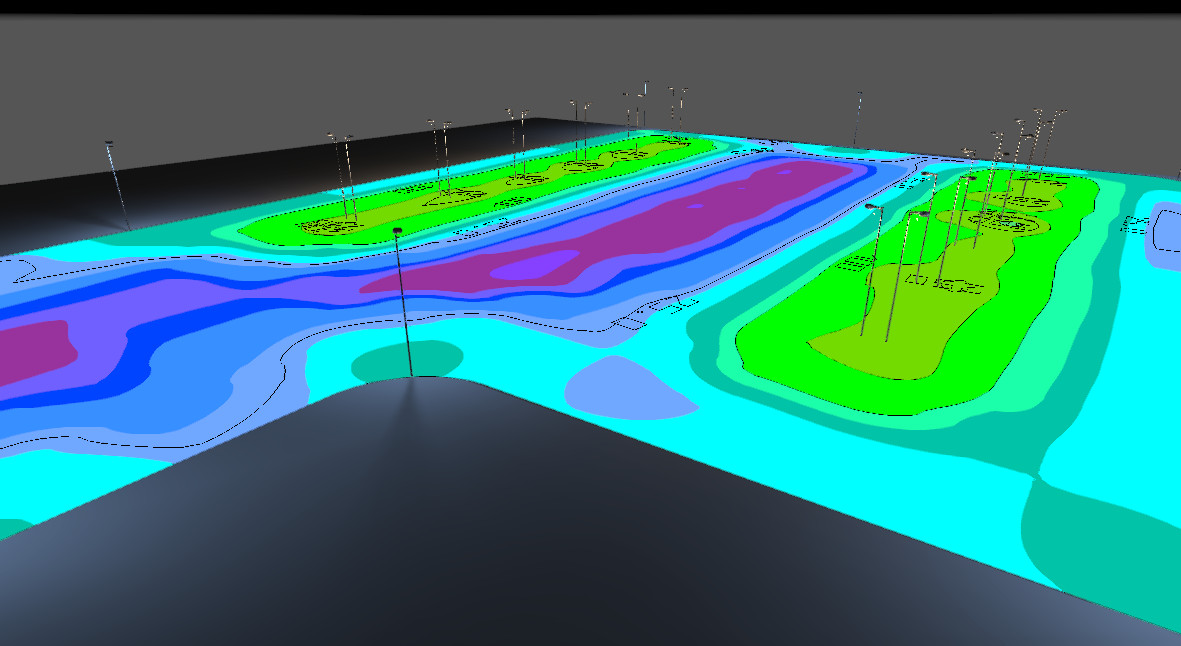
This is often more important than the total amount of light. Uniformity measures how evenly the light is spread.
- The Goal:You want to avoid “hot spots” (areas that are too bright) and “dead zones” (dark patches).
- Safety:For walkways, a uniformity of 0.25 to 0.40 is standard.
- The Risk:Very low uniformity creates a dangerous “cave effect” blindingly bright under the lamp but pitch black just a few meters away.
Uniformity
- Light Distribution and Photometry
Not all lights are created equal. A report uses IES files digital fingerprints of a light fixture to show how the beam spreads.
- Spotlights:Have narrow beams (e.g., 24°) for highlighting specific areas or maintaining “throw” from high mounting heights.
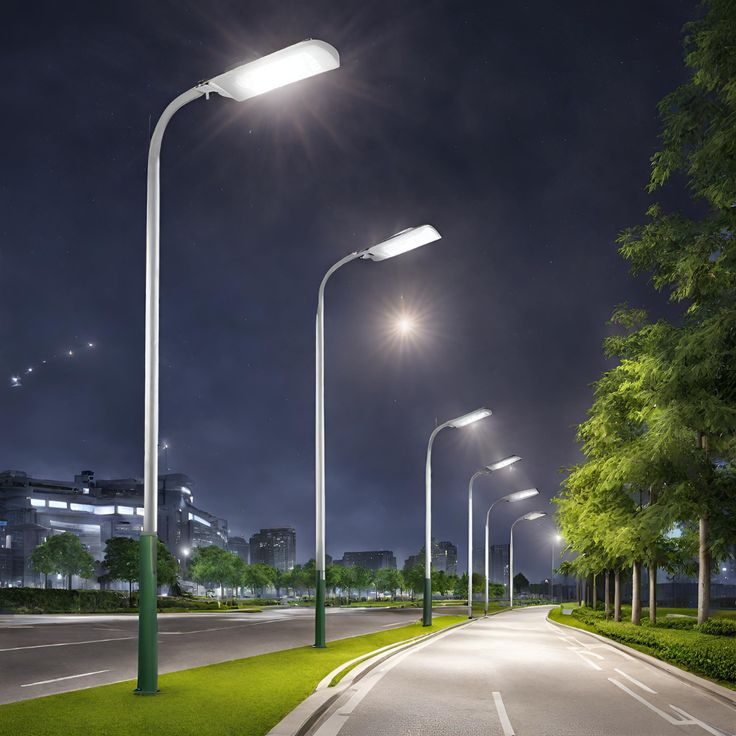
- Street Lights:Use specialized asymmetric optics to “push” light along a road rather than wasting it by shining it into the sky.
Why Do You Need One?
- Safety and Compliance: Standards like EN 12464(e.g., EN 12464-1:2021 for indoor workplaces) set legal requirements for lighting levels and visual tasks. A lux report proves you are following these rules.
- Energy Efficiency:By simulating the space, you can determine exactly how many fixtures you need, preventing “over-lighting”. You can also account for specialized equipment like radar sensors that dim tubes to a “standby” mode (e.g., 30% output) when no motion is detected.
- Accuracy:A professional report accounts for mounting heights, wall colors, and floor-to-ceiling heights. For multi-story buildings, it ensures that floor slabs stack perfectly and that there are no “light leaks” in the 3D model.
Summary
A lux report is more than just a collection of numbers; it is a blueprint for a well-lit environment. By using DIALux to model your project, you ensure that every corner of your building from the ground floor to the rooftop is illuminated perfectly.