
Electrical Protection Device 101: Do You Know the Difference?
Selecting the right protective device is essential for ensuring operational safety, preventing equipment damage, and complying with electrical standards across industrial, commercial, and residential projects.
Here is a quick reference guide breaking down 9 common electrical protection devices and their core functions:
Circuit & Load Protection
-
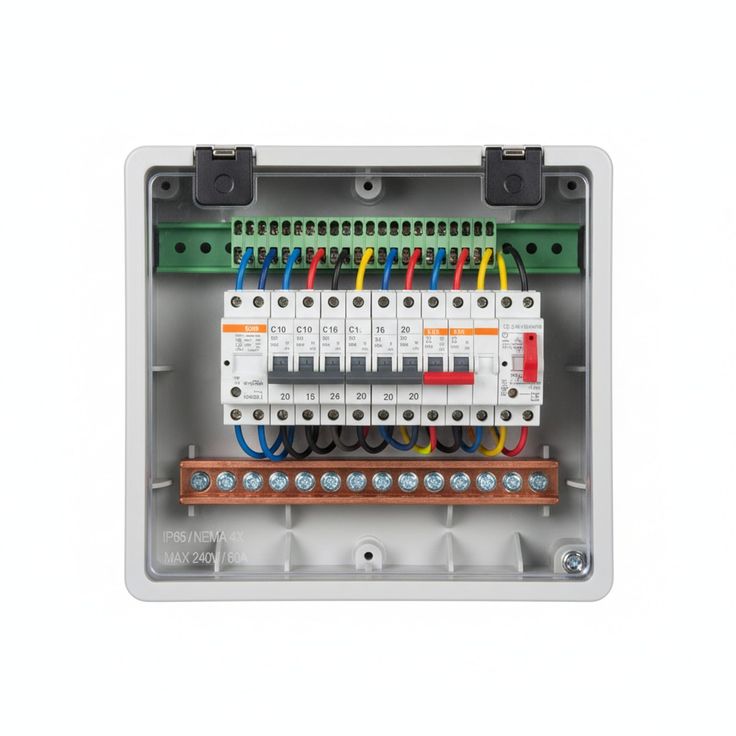
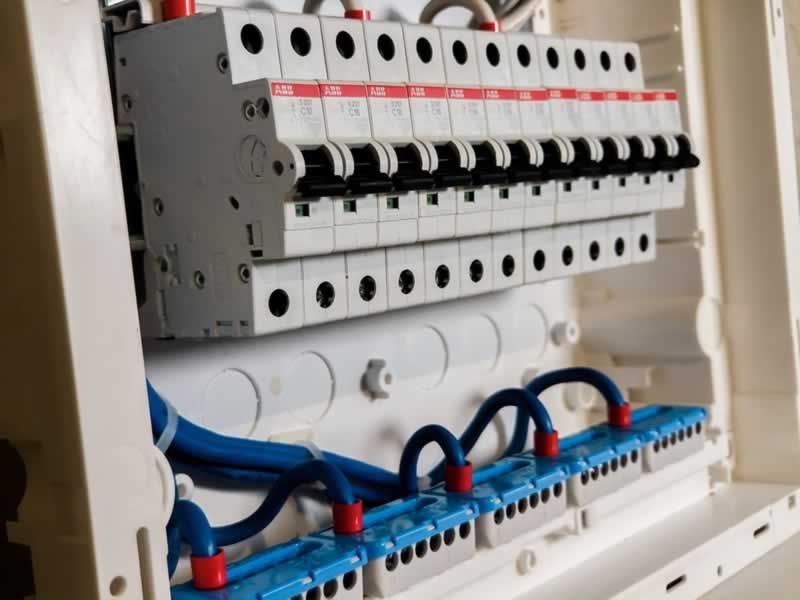
MCB (Miniature Circuit Breaker): Protects low-voltage circuits against standard overloads and short circuits.
-
MCCB (Molded Case Circuit Breaker): Built for higher-current applications with adjustable trip settings.
-
FUSE (Cartridge): Melts an internal element to break the circuit when current exceeds rated capacity.
-
Thermal Overload Relay: Protects industrial motors by disconnecting power when sustained overcurrent is detected.
Personnel & Earth Leakage Protection
-
RCCB (Residual Current Circuit Breaker): Detects earth leakage to prevent electric shock (Note: Does not protect against overloads).
-
RCBO (Residual Current Breaker with Overcurrent): An all-in-one solution combining MCB + RCCB protection in a single module.
-
ELCB (Earth Leakage Circuit Breaker): Legacy voltage-operated earth leakage technology, mostly replaced by modern RCCBs/RCBOs.
System Safety & Isolation
-
SPD (Surge Protection Device): Diverts transient voltage spikes (from lightning or switching) safely to ground.
-
Isolator (Isolation Switch): Manually disconnects circuit power for safe maintenance. Not a protective tripping device.
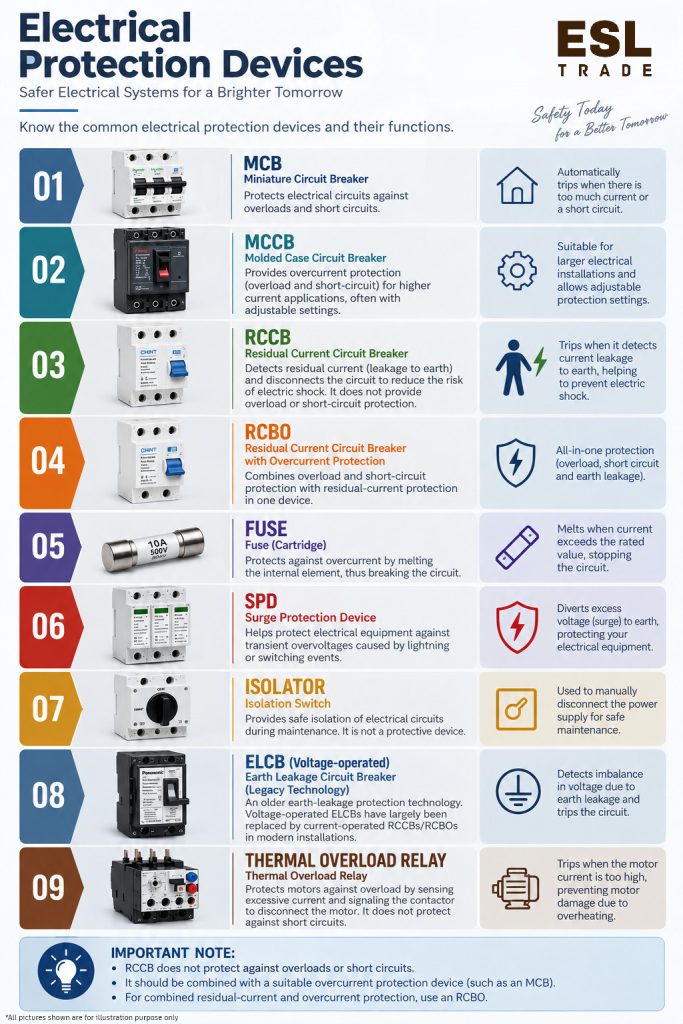
Circuit breaker
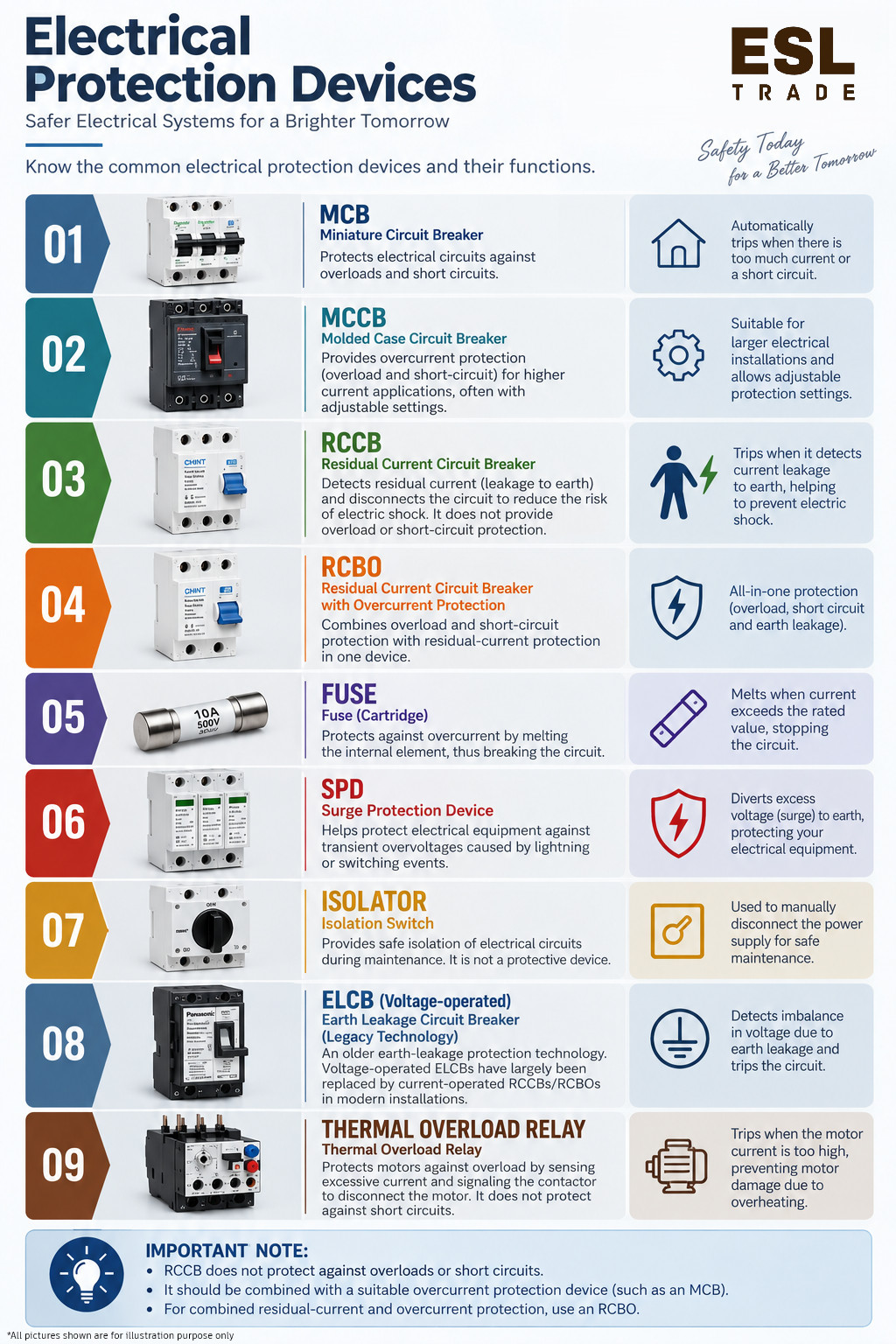
Key Design Takeaway: Never rely on an RCCB alone for complete protection! Pair it with a standard MCB for overcurrent protection, or streamline your distribution board design by specifying an RCBO.
Which protection device do you specify most in your distribution panel designs? Let us know Now!
#ElectricalEngineering #ElectricalSafety #CircuitBreaker #Switchgear #ElectricalDesign #PowerDistribution #BuildingServices #Electrician #PanelBuilding #ESLTrade