Demystifying IP Rating: The Ultimate Consumer Guide For Excellent Waterproof and Dustproof Tech
Have you ever looked at the specifications of a outdoor floodlight, a bathroom fixture, or even your smartphone and noticed a code like IP65, IP67, or IP68?
If you aren’t entirely sure what those numbers mean, you aren’t alone. Many shoppers assume a product labeled “water-resistant” can survive a heavy downpour or a drop in the pool only to end up with broken equipment and a voided warranty.
To help you make informed buying decisions, this guide breaks down exactly what IP (Ingress Protection) ratings mean, how to read them, and how to choose the right level of protection for your needs.
1.0 : What is an IP Rating?
IP stands for Ingress Protection. Developed by the International Electrotechnical Commission (IEC) under the IEC 60529 standard, this ranking system provides a reliable standard for measuring how well an electrical device’s enclosure protects its internal components against two main elements: solids (like dust and dirt) and liquids (like water).
Rather than relying on vague marketing buzzwords like “waterproof” or “dust-resistant,” an IP rating gives you exact, laboratory-tested parameters regarding what a device can actually withstand.
2.0 : How to Read an IP Rating (The Two-Digit System)
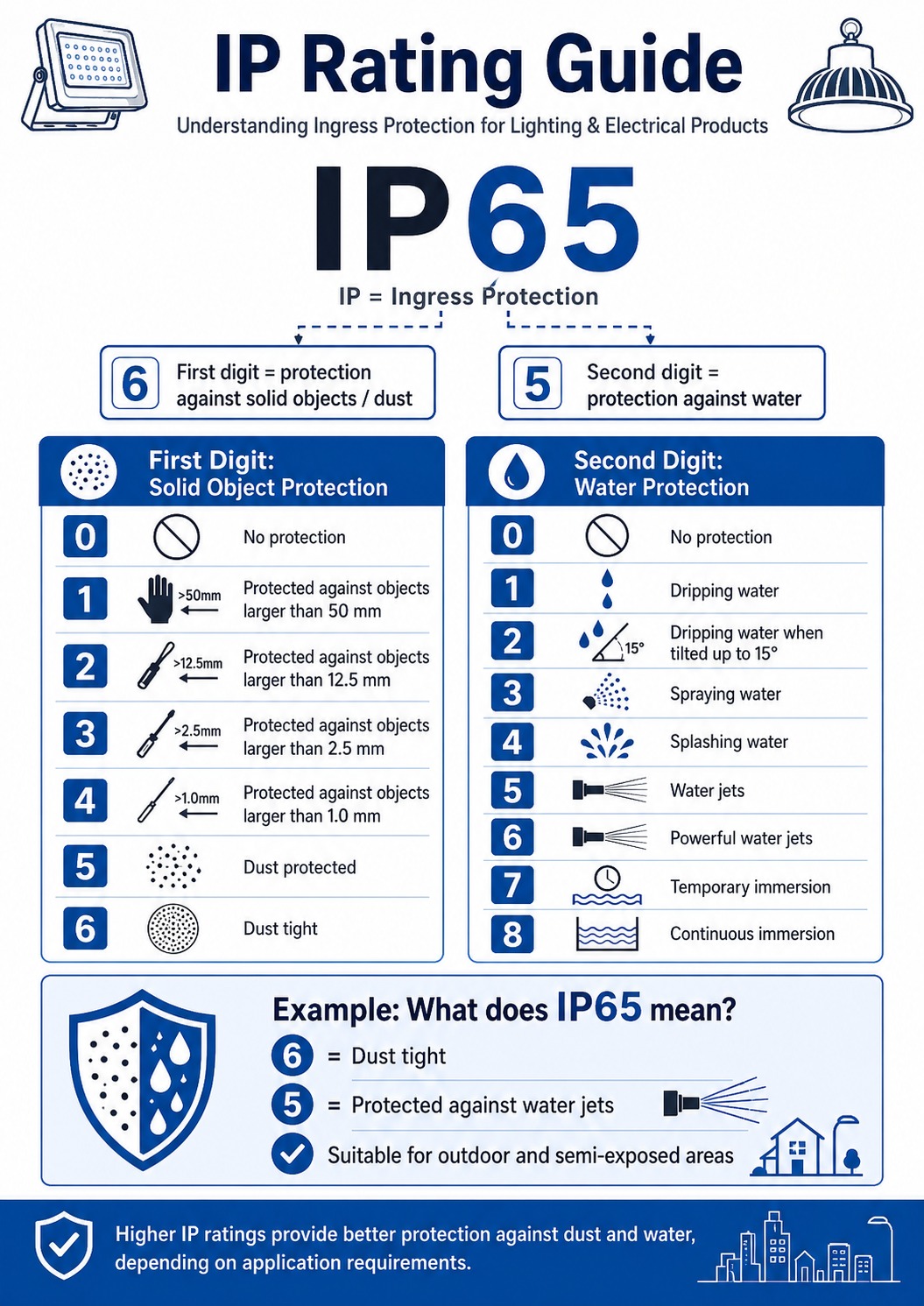
An IP rating is almost always followed by two digits (e.g., IP67). Each digit represents a completely independent testing standard:
- The First Digit (0 to 6): Solid Object Protection. This tells you how well the device keeps out solid materials like fingers, tools, wires, and airborne dust particles.
- The Second Digit (0 to 9): Liquid Protection. This tells you the level of protection the internal electronics have against moisture, ranging from light condensation to high-pressure water jets and total immersion.
- If you ever see an “X” in place of one of the digits (such as IPX7), it simply means the device has only been officially rated for one category usually water protection and has not been formal tested for the other.
3.0 : The IP Rating Cheat Sheets
To help you decode your electronics, use these tables based on the official IEC 60529 definitions.
3.1 : Solid Ingress Protection (First Digit)
| Rating | Protects Against | Practical Meaning |
| 0 | No protection | Completely open to dust and solid materials. |
| 1 | Large solid objects (>50mm) | Protects against accidental touch by a hand. |
| 2 | Medium solid objects (>12.5mm) | Protects against fingers or small tools. |
| 3 | Small solid objects (>2.5mm) | Protects against thick wires or tools. |
| 4 | Micro solid objects (>1mm) | Protects against most thin wires or screws. |
| 5 | Dust-protected | Some dust can enter, but not enough to interfere with equipment operation. |
| 6 | Dust-tight | Complete protection; no dust can enter the enclosure. |
3.2 : Moisture & Liquid Protection (Second Digit)
| Rating | Protects Against | Real-World Application |
| 0 | No protection | Water will easily damage the electronics. |
| 1 | Vertically dripping water | Can handle minimal condensation or light vertical drips. |
| 2 | Water dripping at a 15° angle | Safe against light rain when tilted slightly. |
| 3 | Spraying water (up to 60° angle) | Can handle light rain showers or direct spray. |
| 4 | Splashing water | Safe against water splashing from any direction (splashproof). |
| 5 | Water jets | Can withstand low-pressure water streams projected by a nozzle. |
| 6 | Powerful water jets | Can handle heavy seas or high-pressure spray from any angle. |
| 7 | Temporary immersion | Safe if submerged in water up to 1 meter deep for up to 30 minutes. |
| 8 | Continuous submersion | Safe for continuous underwater use (typically 1 to 3 meters deep). |
| 9K | High-pressure/High-temp jets | Can withstand intensive, hot-water power-washing. |
IP RATING
4.0 : Common IP Ratings in Everyday Life
When shopping on our website or evaluating products for your property, you will most frequently encounter these key combinations:
- IP20:Excellent for standard indoor environments like living rooms and offices. It prevents you from accidentally touching live wires but offers no protection against moisture.
- IP44:Often referred to as “splashproof.” This rating is widely used for residential bathroom lighting (outside immediate shower zones) and sheltered outdoor fixtures because it can easily handle stray splashes of water.
- IP65:Fully dust-tight and capable of handling low-pressure water streams. This is the baseline industry standard for high-quality outdoor security lights and landscape lighting that must withstand rainy weather.
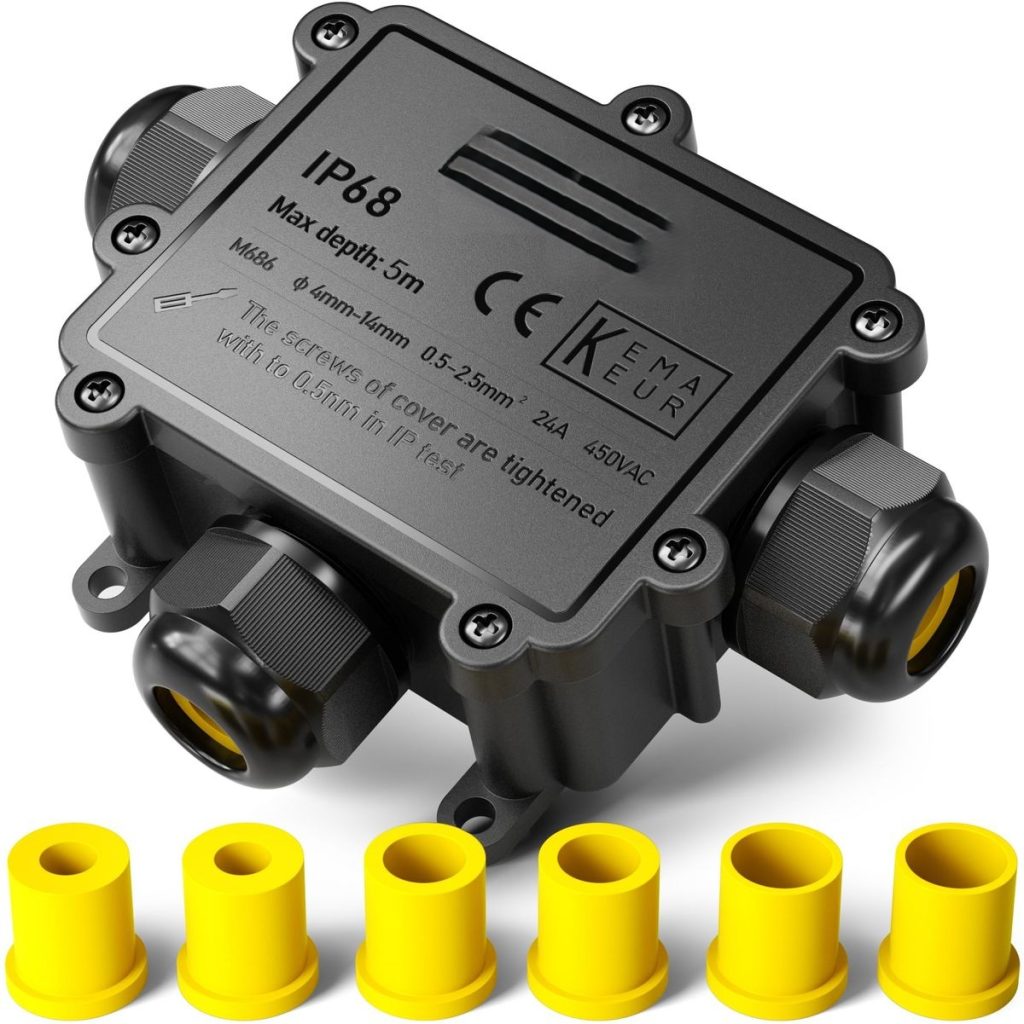
- IP67 / IP68: These devices are protected against total immersion. If you are picking out smart devices or fixtures prone to standing water or extreme outdoor exposure, look for these ratings.
5.0 : Summary Checklist: How to Choose What You Need
Before clicking “Add to Cart,” ask yourself these three quick questions to avoid overpaying for unnecessary protection or accidentally under-protecting your gear:
- Will it be indoors or outdoors? Indoor items rarely need more thanIP20 unless they are in high-moisture zones. Outdoor items should generally feature a minimum of IP44 (if sheltered) or IP65 (if fully exposed to rain).
- Is dust or debrisan issue? For industrial setups, workshops, or coastal areas with windblown sand, a first digit of 6 (dust-tight) is crucial.
- Will it go underwater? For swimming pools, ponds, or boat docks, settle for nothing less than IP67 or IP68.
References
For those who want to review the official engineering benchmarks and industrial testing procedures behind product ingress protection, see the following standard literature:
- International Electrotechnical Commission (IEC). IEC 60529:Degrees of protection provided by enclosures (IP Code). This is the foundational international standard defining how ingress testing is executed and graded worldwide.
- National Electrical Manufacturers Association (NEMA).While IP ratings are used globally, NEMA standards are frequently cross-referenced to compare environmental enclosure safety requirements.