
The Heart of Home Safety: A Beginner’s Guide to Electrical Distribution Boards (DB Boxes)
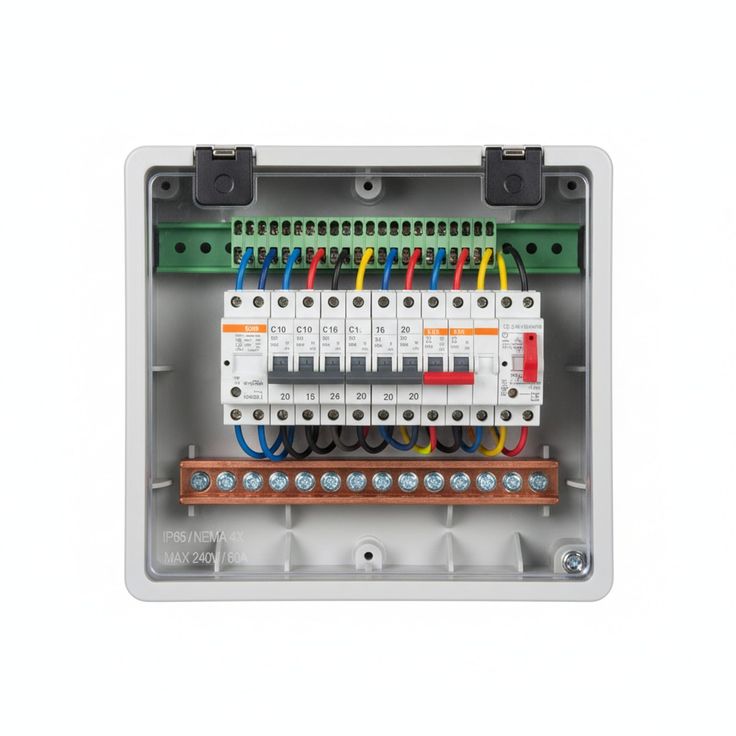
Think of your building’s electrical setup like a human body. The wiring acts as the veins, the electricity is the blood, and the Distribution Board (DB Board) often called the MCB Box is the absolute heart of the system.
If something goes wrong with an appliance, the DB board steps in to stop damage, prevent fires, and save lives.
Whether you are a homeowner renovating your space or a sales professional helping a client choose the right fit, here is everything you must know about DB boxes.
- What Exactly is a DB Board?
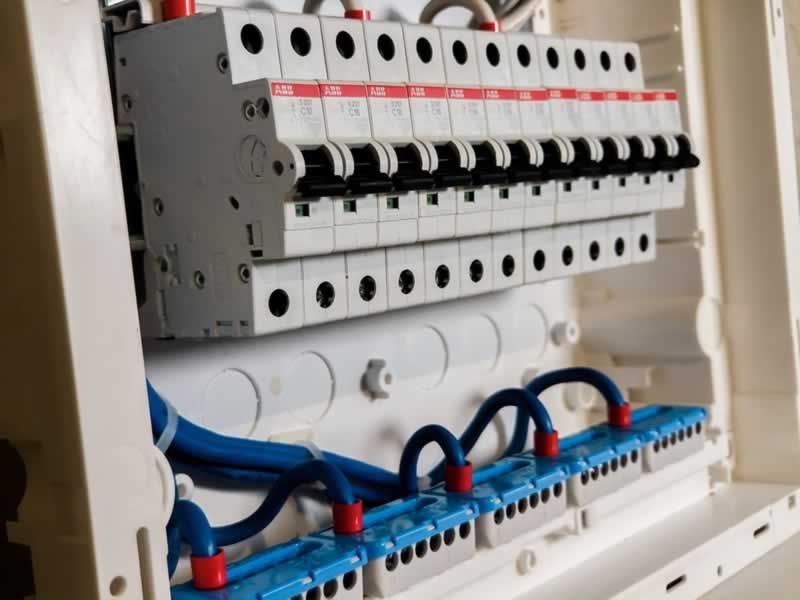
A Distribution Board takes the main electrical supply coming into a building and splits it into smaller, safer paths (called circuits) to power your lights, air conditioners, fans, and wall sockets.
Its primary job is protection. If a circuit gets overloaded (like plugging in too many high-power appliances at once), the DB board safely shuts down just that specific section before the wires overheat.
- Decoding the Jargon: What is Inside the Box?
When talking to contractors or customers, you will constantly hear three acronyms. Here is what they actually mean in plain English:
- Main Switch: This is the master control. Flipping this off cuts all power to the entire property instantly.
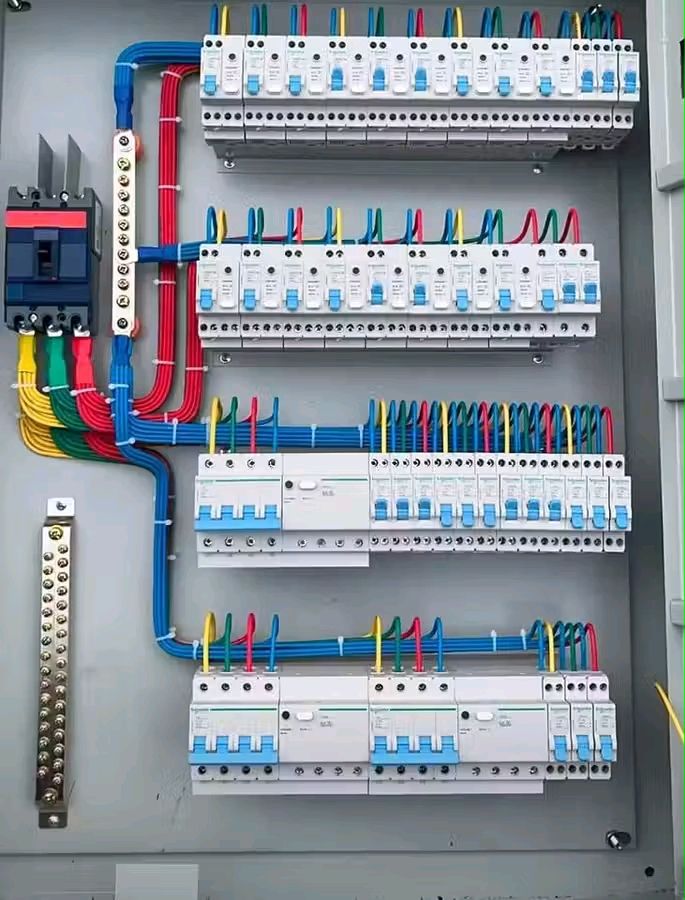
- RCCB / ELCB (Residual Current Circuit Breaker): This is the life-saver. It detects minor electrical leaks (shocks) or if current is escaping where it shouldn’t. If you touch a faulty wire, the RCCB trips instantly to prevent fatal electrocution.
- MCB (Miniature Circuit Breaker): These are the individual switches for specific zones (e.g., one MCB for the kitchen, one for the living room AC). If the kitchen microwave shorts out, only that specific MCB trips, leaving the rest of your house in the light.
- Key Buying Decisions
When choosing a board from our ESL Trade DB Board & MCB Box collection, focus on three main specifications:
- Material: Plastic vs. Metal Enclosures
- Plastic/PVC Boxes (like the EPS Plastic Enclosure Box):Best for homes and small offices. They are lightweight, look cleaner on walls, offer high impact resistance, and do not rust.
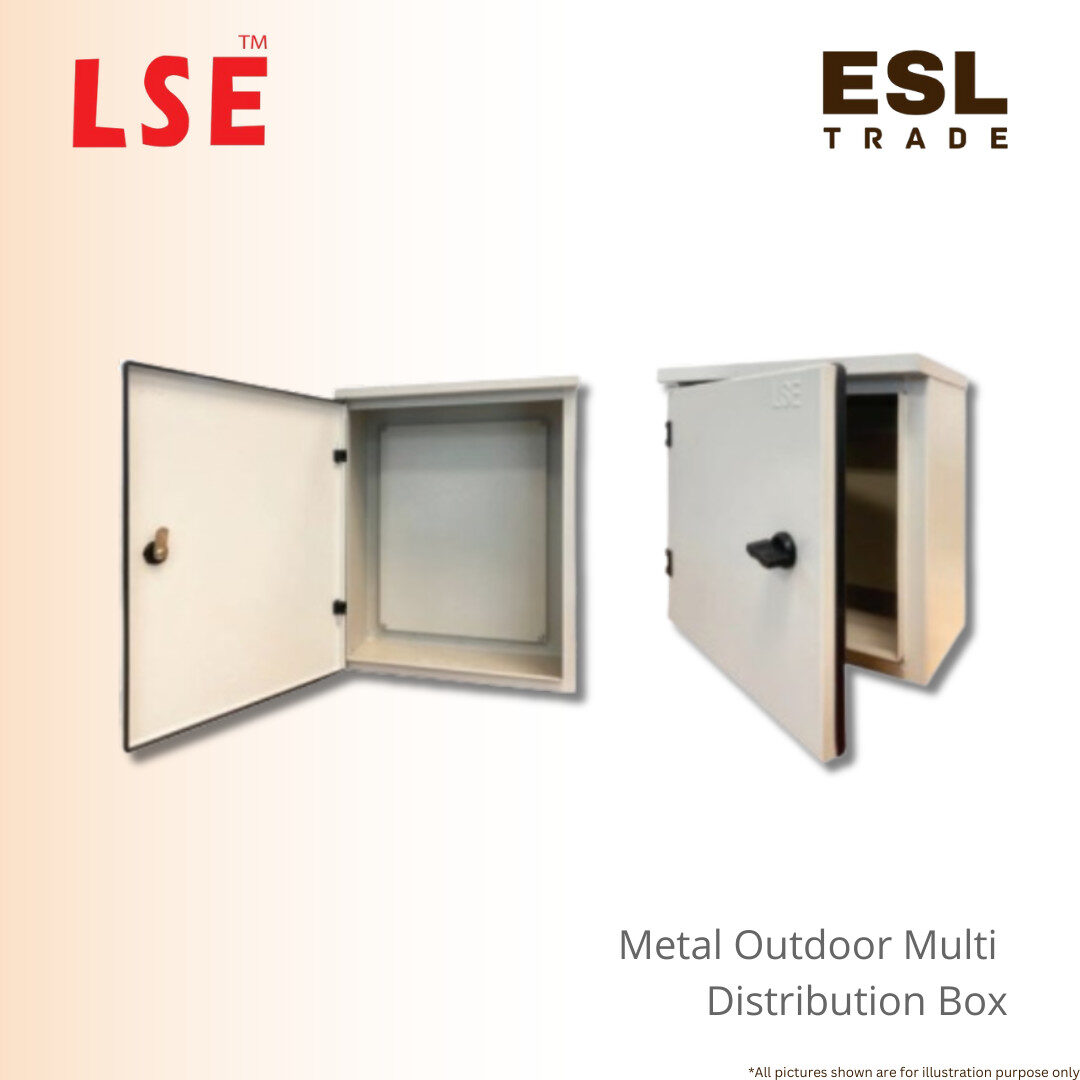
- Metal/Mild Steel Boxes (like the LSE Mild Steel Indoor Box):Essential for industrial settings, factories, or commercial buildings. They offer superior fire resistance and heavy-duty durability to survive tough environments.
- Sizing: What are “Ways”?
You will see terms like 4-way, 14-way, or even 52-way.
A “Way” basically refers to how many standard single-pole MCB switches can fit inside the box.
Pro Tip for Sales:
Always advise customers to buy a slightly larger box than they currently need. If a homeowner has 10 circuits today but wants to add a new air conditioner next year, a 14-way box leaves them room to grow without requiring an expensive replacement of the whole board later!
- Single Phase vs. 3-Phase (Busbar Systems)
- Single Phase: Standard for small to medium residential homes.
- 3-Phase (like the EPS Busbar System Metal Clad 415V):Crucial for larger homes, commercial shops, and factories using heavy machinery or multiple massive air conditioning units. The integrated busbar system simplifies the internal copper wiring, making high-voltage management incredibly safe and reliable.
FAQ:
- Handling Common Customer Questions
- Customer:“Can I just buy the cheapest plastic box for my small workshop?”
- Sales Response: “For a workshop, we strongly recommend a mild steel metal clad box. Workshops often feature higher heat, dust, and risk of physical impact. Metal enclosures offer the fire protection and ruggedness required by industrial safety standards.”
- Customer:“My contractor asked for a 12-way box, but you only have 14-way in stock. Will it work?”
- Sales Response:“Yes, perfectly! A 14-way box gives you exactly what you need plus 2 extra spaces. It’s actually better because it leaves you room for future electrical upgrades like adding an EV charger or another water heater.”
- Indoor vs. Outdoor KWH Meter Boxes: What is the Difference?
While the DB board lives safely inside your property to distribute power, you also need an enclosure for your KWH Meter (the device Tenaga Nasional Berhad (TNB) uses to measure your electricity usage).
Many buyers confuse standard indoor DB boxes with KWH meter boxes. Depending on the building layout, you will need to choose between an Indoor or Outdoor setup. Here is how they compare:
- Outdoor KWH Meter Boxes (The Modern Standard)
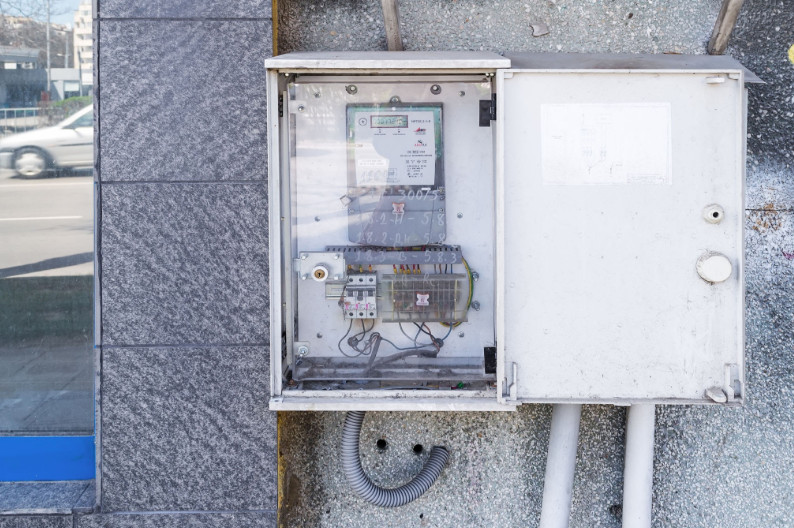
If you look at most modern terrace houses, semi-Ds, or shop lots in Malaysia, the meter box is mounted right on the front gate pillar or exterior wall.
- The Materials:These are usually made of heavy-duty, weather-resistant fiberglass/polycarbonate (like Fiber KWH Meter Boxes) or weatherproof coated metal.
- The Features:They must feature a transparent, high-impact viewing window so TNB readers can check your meter without entering your property.
- They also require high IP (Ingress Protection) ratings meaning they are tightly sealed against heavy Malaysian downpours, dust, and insects.
Best For: New residential developments, landed properties, and any building where the meter needs to be publicly accessible from the street.
- Indoor KWH Meter Boxes
Indoor meter boxes are installed inside the property often right next to the main DB board in a utility room, or lined up in a dedicated electrical riser room.
- The Materials:Usually made of mild steel (metal clad) or high-grade PVC. Since they do not have to fight the rain or intense sunlight, weatherproofing is less of a priority, but mechanical sturdiness is still key.
- The Features:They often come with neat, lockable solid doors to match the interior look of an office or hallway, as a viewing window isn’t strictly required if the room is accessible to maintenance staff.
- Best For:High-rise apartments, condominiums, multi-story office blocks, or older landed homes where the meter was historically placed inside the house.
Tip:
- If a contractor is rewiring an older house or handling a new renovation, ask them where the TNB meter is located.
- If it’s exposed to the elements outside, a standard indoor DB box will fail quickly. They must use a dedicated weatherproof Outdoor KWH box to comply with safety standards and prevent water shorts.
FAQ:
- Customer:“Can I just use a standard plastic indoor DB box to house my meter outside on the gate post?”
- Sales Response:“We highly advise against that. Indoor boxes don’t have the UV-stabilizers or rubber seals needed to withstand rain and harsh Malaysian sunlight. For an outdoor meter, you need a dedicated Fiber or Weatherproof Metal KWH Meter Box with an inspection window so it stays completely waterproof and allows TNB to read it easily.
References :
- Suruhanjaya Tenaga (Energy Commission of Malaysia)
- Electricity Regulations 1994 (Regulation 36 & Regulation 97): Mandates the compulsory use of Residual Current Devices (RCCBs/ELCBs) for earth leakage protection and requires all consumer electrical equipment to hold a valid Certificate of Approval (CoA) and ST-SIRIM labeling.
- Guidelines for Electrical Wiring in Residential Buildings: Outlines structural requirements for consumer units, including proper current-carrying capacities and protective earthing standards for TT earthing systems.
- Department of Standards Malaysia (JSM)
- MS 1979:2015 / DMS 1979:2026 (Electrical Installations of Buildings – Code of Practice): Establishes the national engineering standard for single-phase (230V) and three-phase (400V) residential distribution, including specific sizing parameters, circuit segregation guidelines, and busbar requirements.
- MS 1936:2016 (Electrical Installations of Buildings – Guide to MS IEC 60364): The official national reference manual governing overcurrent protection, miniature circuit breaker (MCB) coordination, and thermal fire safety management within non-domestic and commercial installations.
- International Electrotechnical Commission (IEC)
- IEC 61439 Series: The international safety benchmark for low-voltage switchgear and controlgear assemblies, defining standard performance rules for enclosed plastic and mild steel distribution boards.

Great content! Keep up the good work!